
 by
by What is Section 21 and how was it used?
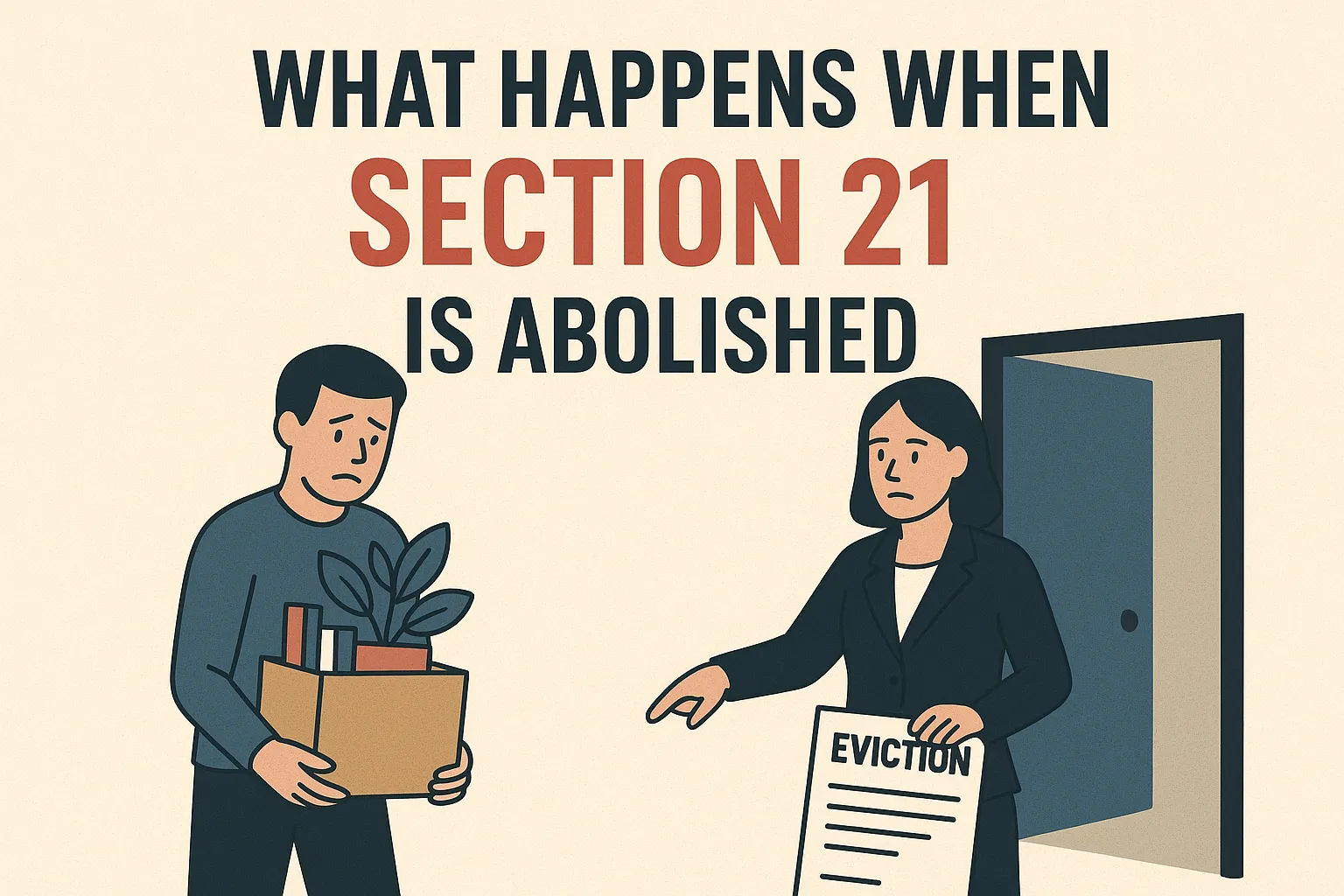
A Section 21 also known as “no-fault” eviction allows a landlord to regain possession of their property by giving the tenant at least two months’ written notice. Unlike other eviction routes, the landlord did not have to give any reason for the notice. Since its introduction, tenants have often lived with uncertainty under Section 21, knowing the landlord could terminate the tenancy with little notice—predominantly on an annual basis when contracts were reviewed. For many owners, this was a standard procedure, but with the landscape changing, support from experienced letting agents is now vital to understand how these historical processes are being replaced.
Why is Section 21 being abolished?
Abolishing Section 21 has been at the forefront of the Renters Rights Act since the beginning. Supporters argue that ending no-fault evictions will give tenants much greater security and stability. Official guidance advises that ending Section 21 was a manifesto commitment intended to let renters stay in their homes longer and avoid sudden homelessness. In other words, tenants will no longer live in fear that they could be evicted once a fixed term ends. For a simple timeline of when the changes take effect, see our Renters’ Rights Act key dates
When will Section 21 be abolished?
The Renters Rights completed its passage through Parliament on 27 October 2025. The government is going to take a “big bang” approach with many changes including the abolishment of Section 21s which will take effect on 1 May 2026. Landlords may continue to serve Section 21 notices up to 30 April 2026; any notice served on or after 1 May 2026 is void. From 1 May 2026 onward all assured tenancies will automatically convert to periodic tenancies, and no new Section 21 notices can be issued.
Revised possession grounds (Section 8)
Without Section 21, landlords must evict through Section 8, citing a specific ground for possession. This process is more rigorous, which is why a full property management service is often recommended to ensure procedures and paperwork are followed and served correctly.
- Sale of property (Ground 1A): A new mandatory ground 1A lets a landlord seek possession if they truly intend to sell the home. This must be done with 4 months’ notice (instead of the old 2 months) and it cannot expire within the first 12 months of the tenancy. Should a landlord evict a tenant on the above ground they must not re-let or re-occupy the property for 12 months afterward.
- Rent arrears (Ground 8): The serious arrears ground 8 is now tougher. A tenant must be at least three months in arrears at the time of serving notice and at the court hearing. The required notice for ground 8 remains 4 weeks, but in effect landlords cannot even start possession proceedings until a full four months of rent is unpaid.
- Other grounds: Existing grounds remain available. For example, ground 2 (landlord or family moving in) and ground 12/13 (mortgage repossession) are still mandatory grounds (though some notice periods have changed).
- Notice periods doubled for both parties. Should a landlord serve notice they will need to give 4 months notice and a tenant must give 2 months.
FAQ
- What was Section 21? It was the statutory “no-fault” eviction notice under the Housing Act 1988. Landlords could give at least two months’ notice to end an assured shorthold tenancy without stating a reason.
- When was Section 21 abolished? The Renters’ Rights Act 2025 (Royal Assent 27 Oct 2025) repeals Section 21. The changes take effect on 1 May 2026.
- What replaces fixed-term tenancies? Under the new law, there are no fixed terms. All existing tenancies convert to rolling (periodic) tenancies on the commencement date meaning there is no end date and the tenancy will only be brought to an end until either party gives notice.
- What replaces Section 21 evictions? Landlords must now evict using Section 8 grounds (i.e. a legally valid reason).
Need advice on Property Management in Bournemouth? The changes to the Renters' Rights Act are significant, but you don't have to navigate them alone. If you would like to discuss the impact of this on you as landlords, and what this means for your tenants, please call our Bournemouth lettings team on 01202 554470. Whether you need a tenant-find service or a comprehensive full property management service, we are here to help.
Share this with
Email
Facebook
Messenger
X
Pinterest
LinkedIn
Copy this link